

Migrant-run businesses in Magdeburg stage shutdown protest as AfD leads ahead of Saxony-Anhalt election
Dozens of businesses owned by migrants in the eastern German city of Magdeburg pulled down their shutters for several hours on Wednesday, staging a coordinated strike to voice oppo
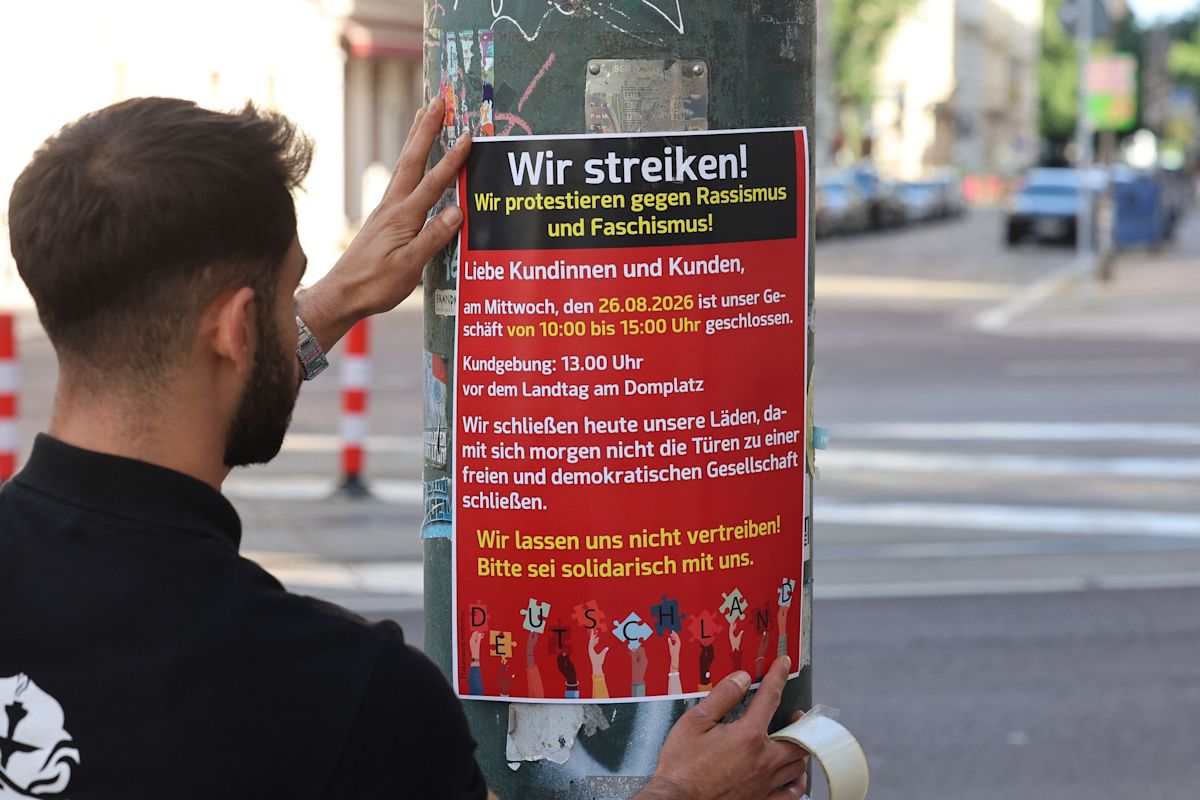
Dozens of businesses owned by migrants in the eastern German city of Magdeburg pulled down their shutters for several hours on Wednesday, staging a coordinated strike to voice opposition to the Alternative for Germany (AfD), the anti-immigration party currently topping polls in the state of Saxony-Anhalt ahead of next month's regional election.
Around 150 enterprises took part in the action, concentrated in the neighbourhood surrounding Hasselbachplatz, one of the city's central squares. The participants included restaurants, barbershops and kiosks, which remained closed between 10 am and 3 pm local time (0800-1300 GMT). According to an organizer, some shopkeepers whose businesses are not migrant-owned also announced they would join the walkout in a show of support.
A demonstration outside the state parliament in Magdeburg was additionally scheduled for Wednesday afternoon, extending the protest beyond the commercial district.
Saeeid Saeeid, who works with the refugee council in Saxony-Anhalt, emphasized that the action was not merely about labour. "What matters to us is this: Nobody should have to demonstrate through work or economic achievement that they have a place in this society," he said.
Organizers described a strong spirit of unity among those involved in the strike. Saeeid noted there was "an extraordinary sense of solidarity" within the community, adding that entrepreneurs were encouraging each other, combining their efforts and raising their voices peacefully against racism and social exclusion.
The central goal of the shutdown, according to a co-organizer, was to illustrate what the city would lose if migrant-operated businesses vanished. She pointed out that migrants sustain care services, deliver parcels and keep the construction and industrial sectors functioning — contributions that often go unnoticed in public debates about immigration.
At the same time, the co-organizer stressed that the protest carried a message that went beyond economic value. "But we don't want to be viewed only as workers, but rather as people with all their needs," said the woman, who works as a social worker by profession.
In her view, the strike was intended above all as a wake-up call for German society and a prompt for voters to scrutinize the AfD's political platform closely before casting their ballots.
The protest comes roughly two weeks before Saxony-Anhalt goes to the polls. The state parliament will be elected on September 6, and the campaign has been overshadowed by the strength of the AfD's support in the region.
The AfD's branch in Saxony-Anhalt currently sits at the top of opinion surveys and is campaigning for an outright majority — a result that would allow the party to control a state parliament's government for the first time in its history. The domestic intelligence service has classified the state branch as a far-right extremist organization, a designation that underscores the stakes of the upcoming vote.
For the business owners and activists behind Wednesday's shutdown, the election represents a moment when the society they live in will define how it views them. By temporarily withdrawing their services from daily life in Magdeburg, they sought to make their absence felt — and to remind voters, in the words of one organizer, that belonging should never depend on productivity alone.
With polls suggesting the race could reshape politics in Germany's east, both the strike and the parliamentary rally are likely to be remembered as among the most visible expressions of opposition to the AfD in the final stretch of the campaign. -- DPA
What's Your Reaction?
 Like
0
 Dislike
0
 Love
0
 Funny
0
 Wow
0
 Sad
0
 Angry
0

Editor Olahraga. Mantan jurnalis olahraga cetak. Meliput Piala Dunia 3 edisi.


Comments (0)