

Europe's natural gas costs climb as thin storage and Hormuz disruption set stage for costlier winter
European wholesale natural gas prices have surged well above where they began the year, and economists warn that household bills could follow if the rally holds. The continent's be
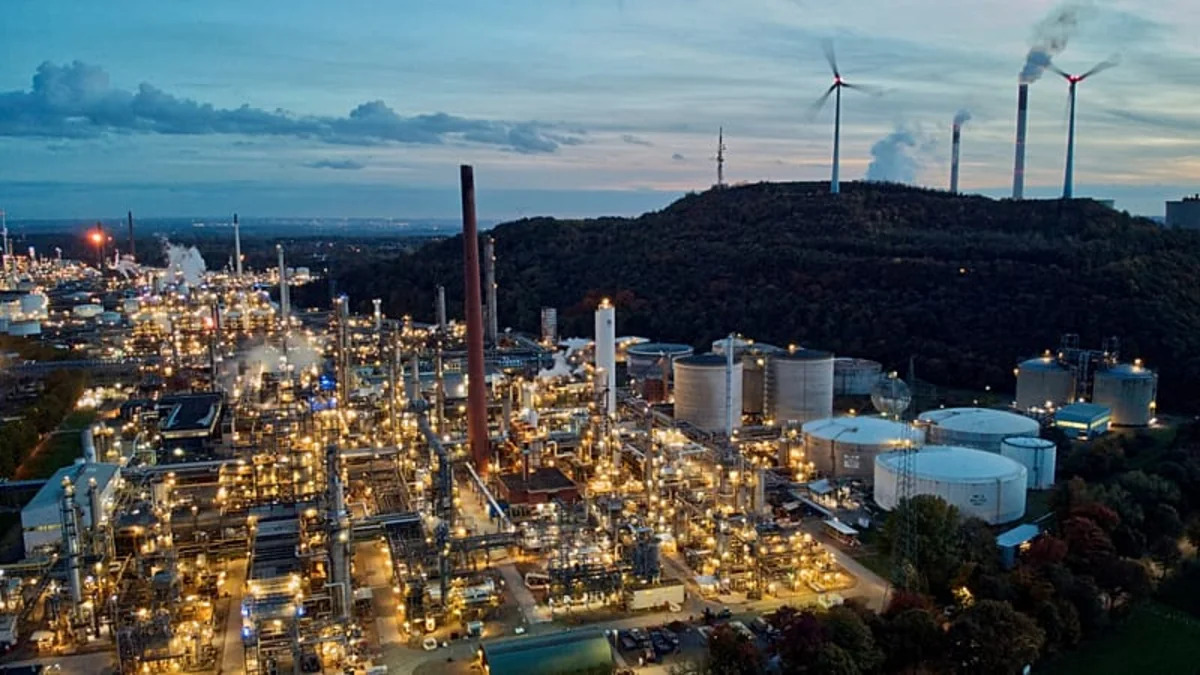
European wholesale natural gas prices have surged well above where they began the year, and economists warn that household bills could follow if the rally holds. The continent's benchmark contract, the Dutch front-month TTF, changed hands above €66 per megawatt-hour on Tuesday after touching higher levels earlier in the day — more than double the roughly €29 recorded in early January.
The jump reflects mounting anxiety over the Strait of Hormuz, whose effective closure has choked off a corridor that normally handles close to a fifth of the world's liquefied natural gas trade. Traders fear the disruption could persist into the heating season just as Europe enters winter with unusually depleted reserves.
Storage data from Gas Infrastructure Europe show EU facilities were 62.99% full at the end of the gas day on 24 August — far short of the 79% five-year seasonal average. Natasha Fielding, who oversees gas and LNG coverage at Argus Media, noted that inventories have only been near these levels once in the past decade and a half: in 2021, on the eve of the last major energy crunch. Among large markets, German sites stood at just 51% capacity and Dutch facilities at 44.3%.
There is some cushion. Oxford Economics calculated in a 13 August report that EU gas demand now runs 15% to 20% below 2021 levels, meaning the bloc can function with leaner stockpiles — though doing so hinges on heavier wintertime LNG purchases that would pit Europe against Asian buyers for the same cargoes. In a bidding contest of that kind, wholesale prices could climb further still.
Goldman Sachs analysts Samantha Dart and Laura Cyr argued, in remarks reported by Bloomberg, that prevailing prices won't suffice to refill storage through winter. Under a scenario in which Middle Eastern energy exports recover only slowly through 2027, they estimate December 2026 TTF contracts would need to exceed €100/MWh — roughly 110% above their €50 baseline forecast.
Tighter supplies could also strain the EU's planned break from Russian gas. Moscow accounted for about 12.5% of combined pipeline and LNG imports in 2025, per European Commission figures, and the Council of the EU moved in January 2026 to outlaw new Russian shipments from 18 March 2026, with a full prohibition targeted by the end of 2027. Oxford Economics suggested Brussels might have to pause elements of that ban if shortages deepen.
For consumers, the pain arrives on a lag rather than overnight. Because suppliers hedge and lock in long-term contracts, retail tariffs track wholesale moves only gradually — on average about six months, according to Oxford Economics, though the pace varies by market. Households on variable-rate plans feel shifts soonest, and countries such as France, Italy and Spain typically see adjustments within a few months, while Germany's and Austria's prevalence of 12- to 24-month fixed deals can delay peak pass-through for nearly a year. Dutch consumers see changes almost immediately. Italy ranks as the most vulnerable big economy owing to its swift price transmission and heavy gas dependence, even though its storage is comparatively full. Much, ultimately, rests on the weather: with gas underpinning most EU space heating, a sustained cold snap could lift demand sharply, and Oxford Economics had already projected — before this latest spike — that eurozone consumer energy prices could run as much as 15% higher year-on-year in the fourth quarter.
What's Your Reaction?
 Like
0
 Dislike
0
 Love
0
 Funny
0
 Wow
0
 Sad
0
 Angry
0

Reporter MotoGP/Formula 1. Meliput balapan motor dan mobil internasional.


Comments (0)